Wurdella player guide
Wurdella Multiplayer Guide
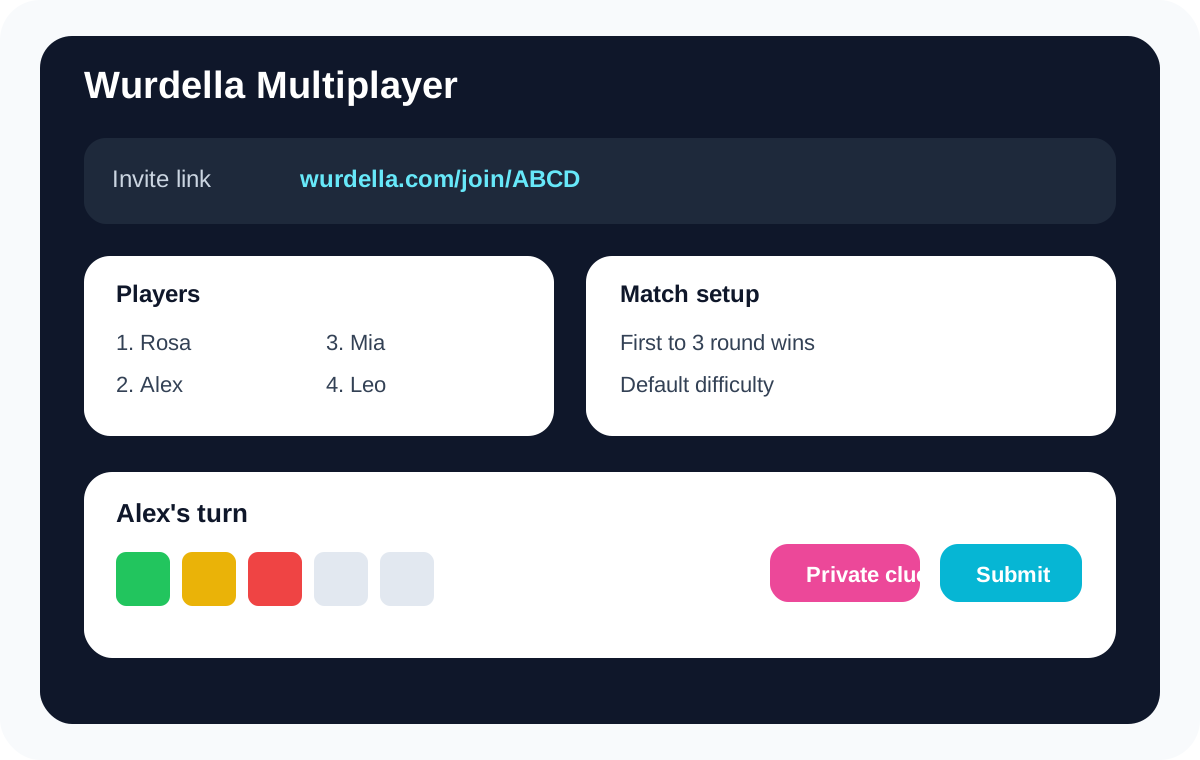
Wurdella multiplayer now has two clear formats: local pass-and-play for people sharing one browser and Challenge a Friend for two players joining a synchronized server-backed room from separate devices. The word logic is the same, but setup, turn order and fairness matter much more once another person is involved.
Choose local or remote multiplayer
Use local Multiplayer when two to four named players are in the same place and can share one phone, tablet or computer. Use Challenge a Friend when two players are in different places and want to join the same match from separate devices.
Remote head-to-head play no longer requires a screen-share host. Create the room, share the invite link or code and let the synchronized match state handle the connection.
Worked examples
- • Family on one tablet: local Multiplayer.
- • Two friends in different cities: Challenge a Friend.
Set the match target before round one
First to one is a sprint, first to three is a strong casual default and first to five gives skill more time to overcome one unusually easy or difficult answer.
Never extend or shorten the target after one player takes the lead. Match length is part of the rules, not a setting to renegotiate when the result becomes inconvenient.
- ✓ First to 1: quick tiebreaker.
- ✓ First to 3: balanced casual match.
- ✓ First to 5: longer competitive set.
Make the starting player alternate across rounds
The starter for a new word should alternate independently of who made the final guess in the previous round. Otherwise an even number of guesses can accidentally return the opening turn to the same player repeatedly.
Alternating starters gives longer matches a predictable rhythm and removes a small but unnecessary turn-order advantage.
Treat clues as a competitive trade-off
The clue is available during rows 1–3 and reduces the score available from a solved round. Use it when the extra semantic information can meaningfully reduce several legal answers.
In a close match, refusing every clue can be just as unstrategic as using one automatically. Compare the score cost with the risk of losing the round entirely.
Agree on house rules before serious play
Decide whether external dictionaries are allowed, whether spectators can suggest words, whether there is a turn timer and whether clue use is unrestricted. Most friend groups need only a few simple rules.
The important part is consistency. A rule introduced after a disagreement will always feel less fair than one everyone knew before the first board.
- ✓ Same difficulty for everyone.
- ✓ Fixed match target.
- ✓ Clear outside-help policy.
- ✓ Consistent clue rule.
- ✓ Alternating round starters.
Choose local multiplayer or Challenge a Friend before you start
Wurdella has two different multiplayer setups. Local multiplayer is pass-and-play for two to four named players sharing one browser. Challenge a Friend is the remote option: one player creates a server-backed room, shares the invite link or code and another player joins from a separate device.
That distinction matters because remote head-to-head play no longer needs the old screen-share workaround. Screen sharing can still be useful for a larger informal group, but a two-player remote challenge should use the synchronized room so both players participate from their own devices.
Worked examples
- • Same room: use local Multiplayer and pass the phone, tablet or laptop.
- • Different locations: use Challenge a Friend and share the invite link.
Make round starters alternate fairly
The player who starts a new round should not be determined accidentally by who happened to make the final guess in the previous round. A fair multi-round match alternates the starting player independently of the last move, so one player does not repeatedly receive the same opening advantage.
This is especially important in longer first-to-three or first-to-five matches. Small turn-order advantages become more noticeable across many words, so the match should make the starter pattern predictable rather than incidental.
Separate match wins from point efficiency
Round wins tell you who is progressing toward the match target. Points tell you how efficiently a player solved, particularly when clue use changes the score available from the round. Those are related but different measurements.
For a casual head-to-head match, use round wins as the official result. If you are running a more formal event, total Wurdella points can be recorded as a secondary statistic or tie-breaker, but that rule should be published before the first match.
Use clues as a match decision, not a reflex
A clue is available during rows 1–3 and carries a scoring cost. In a close match, the right decision depends on how much uncertainty remains. Paying for help when one obvious answer fits wastes points; refusing help when five unfamiliar candidates remain can throw away the entire round.
Before using the clue, list the candidates that still satisfy the board. If the clue could realistically remove several of them, the trade-off is meaningful. If the board already leaves only one sensible word, keep the score.
Set fair house rules before competitive play
A multiplayer game becomes frustrating when the rules are invented after a disagreement. Decide the difficulty, match target, whether external dictionaries are allowed, whether spectators may suggest words and whether there is a turn time limit before the first board appears.
The rules do not need to be complicated. Default difficulty, first to three wins, no external answer searches and one minute per turn is enough structure for most friend groups.
- ✓ Use the same difficulty for all players.
- ✓ Choose the match target in advance.
- ✓ Agree on outside help before round one.
- ✓ Keep clue rules consistent.
- ✓ Alternate round starters.
When multiplayer is better than Team mode or Daily
Use multiplayer when individual players are competing directly. Use Team mode when several people need to discuss one shared decision. Use Daily when the goal is comparison against the same date-based answer rather than a live match.
The mechanics overlap, but the social purpose is different. Picking the right mode prevents a two-person competition from becoming an awkward team activity or a group session from turning into a sequence of private turns.
Next step
Use the guide on a real board
Try the guide on a real board in unlimited play, compare actual word patterns in the Word Finder or use Challenge a Friend when the guide is about competitive play.