Wurdella player guide
Wurdella Team Mode Guide
A team round is at its best when everyone gets to reason, not when the loudest solver dictates six guesses. Wurdella Team mode is built around two groups sharing one game state, so the useful strategy is as much about discussion structure as vocabulary.
Create balanced teams
Balance by experience as well as head count. If every experienced word-game player is on one side, equal team sizes will not produce an equal match.
For family play, pairing an adult with a child often works better than adults versus children. In classrooms, distribute stronger readers across teams rather than allowing self-selection to stack one side.
Use evidence first, candidates second
Before anyone suggests a full word, name the fixed greens, required yellows, rejected yellow positions and excluded letters. Only then should the team compare complete candidates.
This two-step routine prevents a confident but impossible answer from taking over the conversation and gives quieter players a concrete way to contribute one verified fact.
- ✓ Read the board.
- ✓ State the constraints.
- ✓ Invite candidate words.
- ✓ Choose the final guess.
Rotate captain and typist roles
One experienced player can quietly become the whole team if the same person explains and submits every guess. Rotate the captain or typist after each round.
You can also assign light roles such as green tracker, yellow-position tracker and excluded-letter checker. The goal is not bureaucracy; it is participation.
Keep clue use fair
Both teams should use the same clue policy. If a clue is available to the active team, the extra information should not automatically become free help for the opposition.
A useful rule is to require the team to explain the existing board before using the clue. That keeps help as a strategic rescue instead of the first response to uncertainty.
Adapt the format for classrooms and workplaces
Classrooms can use short first-to-two or first-to-three matches with silent thinking time before discussion. Work teams should keep sessions optional, time-boxed and simple enough that the activity does not take over the meeting.
For remote group play, one shared Team board over screen share is still the simplest format. Challenge a Friend is the separate-device option for direct two-player competition.
Build an evidence-first team routine
Team play becomes chaotic when everyone calls out complete words at once. The better order is evidence first, candidates second: name the fixed greens, required yellows, rejected yellow positions and excluded letters before anyone argues for a full answer.
A captain can summarize those constraints and then invite one candidate from each teammate. This makes the final guess easier to defend and gives quieter players a concrete way to contribute even when they are not the fastest person to produce words.
- ✓ Read the board before suggesting answers.
- ✓ Give each teammate a defined chance to contribute.
- ✓ Rotate the captain or typist every round.
- ✓ Use one clue rule for both teams.
Balance teams by experience, not just head count
Two teams with the same number of people can still be badly mismatched if every experienced word-game player is on one side. Mix ages, reading confidence and puzzle experience so both teams have someone who can spot patterns and someone who benefits from hearing the reasoning explained.
In classrooms, distribute stronger readers across the teams. In family play, pairing an adult with a child often creates a better game than adults versus children because each side has access to both vocabulary and fresh pattern thinking.
Use team roles to stop one person taking over
Assign simple roles that change each round: one person tracks greens, another tracks yellow positions, another watches excluded letters and a captain enters the final word. Roles give everyone a reason to look at the board and make it harder for the loudest solver to become the entire team.
The roles do not need to become formal paperwork. Their purpose is simply to distribute attention and make the reasoning visible.
Adapt Team mode for classrooms
A classroom match should be short enough to stay part of the lesson. First to two or first to three works well, with thirty seconds of silent thinking before team discussion. Require the active team to explain why its word fits the visible evidence before it is submitted.
After the solve, one vocabulary task is enough: define the word, use it in a sentence or identify its word class. The puzzle should remain the center of the activity rather than becoming a worksheet disguised as a game.
Adapt Team mode for workplaces and remote groups
For a workplace warm-up, keep the activity optional and time-boxed. A short first-to-three match can create a useful shared problem without taking over the meeting. Rotate the spokesperson so the same confident colleague does not control every round.
For remote groups, one host can share the Team board while people discuss through voice or chat. Separate-device Challenge a Friend is designed for head-to-head remote play, while Team mode remains best when the group is discussing one shared game state.
Run a simple team tournament
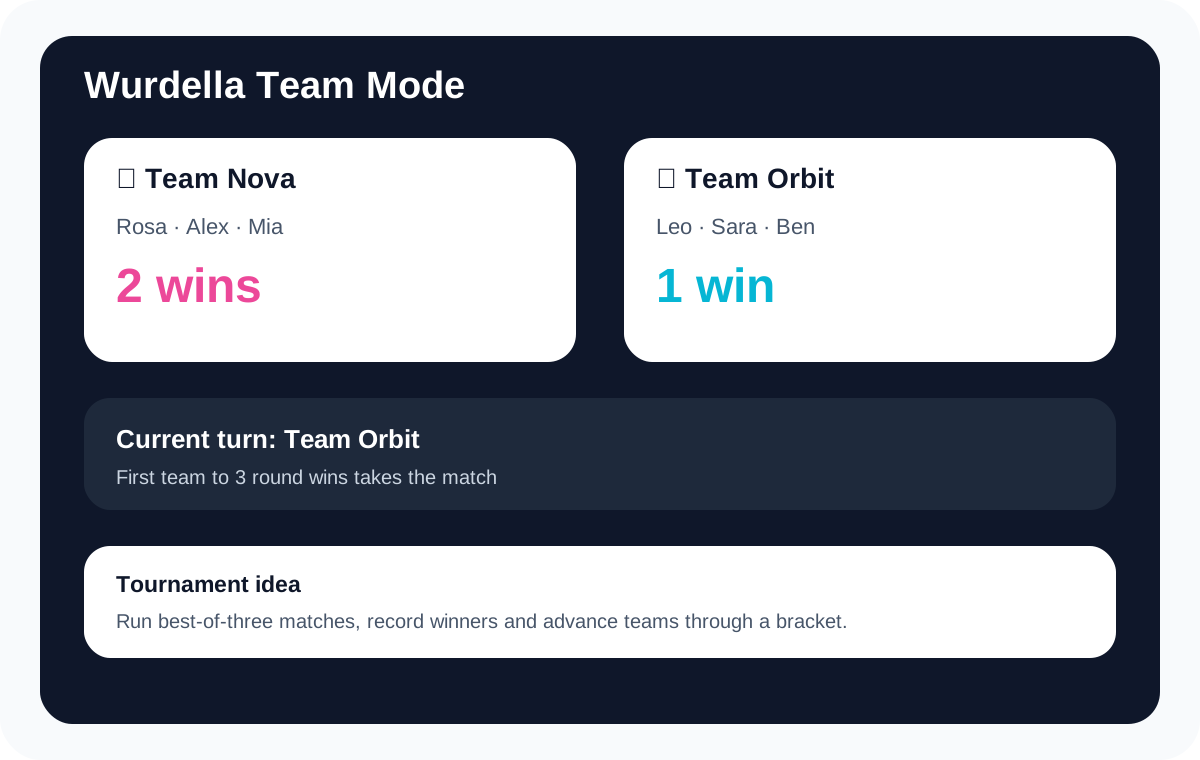
With four teams, a short round robin is easy to understand and gives every team more than one match. With larger groups, use pools followed by semifinals or a knockout bracket. Keep early matches short so the event does not become impossible to schedule.
Publish the difficulty, match length and tie-breaker before play starts. Match wins should usually decide advancement; total points can be a secondary tie-break if every team has played under comparable conditions.
Next step
Use the guide on a real board
Try the guide on a real board in unlimited play, compare actual word patterns in the Word Finder or use Challenge a Friend when the guide is about competitive play.