Local multiplayer: pass one device between players
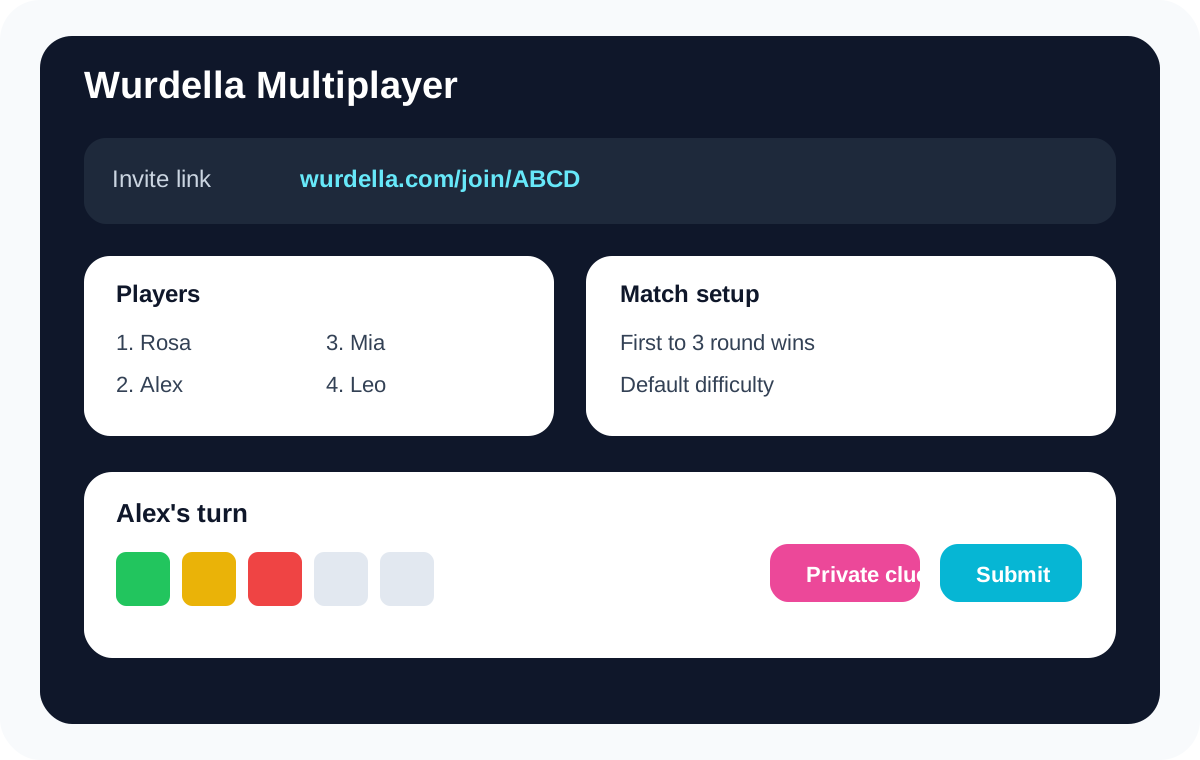
Local multiplayer is designed for two to four named players sharing the same browser session. The interface shows whose turn it is, keeps the board visible and tracks round wins toward the selected match target.
This mode works well at a table, on a family tablet or in a classroom pair activity because there is one authoritative board and no synchronization step. Decide whether table talk is allowed before starting, especially if players are competitive.
- ✓ Two to four named players
- ✓ One shared browser
- ✓ Visible turn order
- ✓ Selectable match target
Challenge a Friend: remote multiplayer on separate devices
Challenge a Friend creates a server-backed remote room. One player creates the match and shares the invite link or room code; the second player joins from another device and both see the same synchronized match state.
Remote play should feel like a real head-to-head game instead of a screen-share workaround. That means each player can participate from their own phone, tablet or computer while the room keeps track of the current round and match score.
- ✓ Create a room
- ✓ Share the invite link
- ✓ Join from another device
- ✓ Server-backed synchronized match
How turns should work across a match
Within a round, players should always know whose action is expected next. Across rounds, the starting player should alternate instead of being chosen accidentally by whoever happened to make the final guess in the previous word.
That distinction matters more than it sounds. Alternating starters reduces an avoidable turn-order advantage and makes a multi-round match feel intentional instead of arbitrary.
Choose a match length before the first board
First to one is a sprint: one unusually easy or difficult answer can decide everything. First to three usually gives enough time for skill and consistency to matter without becoming a long session. First to five works better for players who want a fuller match with room for comebacks.
Whatever target you choose, keep it fixed once the match starts. Changing the target after one player takes the lead turns a friendly rule into an argument about fairness.
- ✓ First to 1: quick tiebreaker
- ✓ First to 3: balanced casual match
- ✓ First to 5: longer competitive set
Clues are strategic because help has a scoring cost
A clue is available during the early rows and can be valuable when several answers still fit. In competitive play, the useful question is not simply whether the clue makes the word easier; it is whether the extra information is worth the points sacrificed.
If the board already fixes most of the answer, keep the points and solve from the evidence. If the remaining candidates are unfamiliar and the round is close to being lost, the clue may be the better match decision.
Use shared board information without copying blindly
Every submitted guess changes the information available in the round. Strong multiplayer players pay attention to the whole board, but they still verify that their own candidate satisfies every green, yellow and excluded-letter rule.
A previous guess can reveal a useful pattern and still suggest the wrong next move. Treat other players' rows as evidence, not instructions.
Fair multiplayer rules for families, classrooms and friend groups
For mixed-age groups, use the same difficulty for everyone and consider rotating who starts each set. For classrooms, keep matches short and require players to explain one piece of board evidence before submitting. For serious friend matches, agree on clue use, outside dictionaries and time limits before round one.
The best house rules are the ones that remove ambiguity without slowing the game down. A one-minute turn limit, no external answer searches and a fixed match target are usually enough.
When to use multiplayer, team mode or Daily instead
Use local multiplayer or Challenge a Friend when individual players are competing directly. Use Team mode when several people need to discuss one decision together. Use Daily when the goal is comparison against the same word instead of a live shared match.
These modes overlap enough to feel familiar but serve different search intents and social situations, which is why Wurdella keeps them separate instead of forcing every group into one interface.