The basic five-letter solving loop
Start broad enough to learn something. After the first row, keep greens fixed, move yellows, remove excluded letters and decide whether the board is still in exploration mode or has become a candidate pattern.
Once three or more positions or letters are informative, direct answer candidates usually become more valuable than unrelated probe words. The exact switch depends on the board, but endless exploration is a common way to waste the final rows.
Choose opening words for information, not reputation
A useful opener normally tests several common, distinct letters and leaves you with a clear second move after both good and bad feedback. It does not need to be a famous starter and it does not need to contain a fixed number of vowels.
Judge an opener over many rounds. If a word repeatedly leaves you unsure what row two should test, it is not doing enough work, even if it sometimes produces an impressive two-guess win.
Yellow letters are position rules, not vague hints
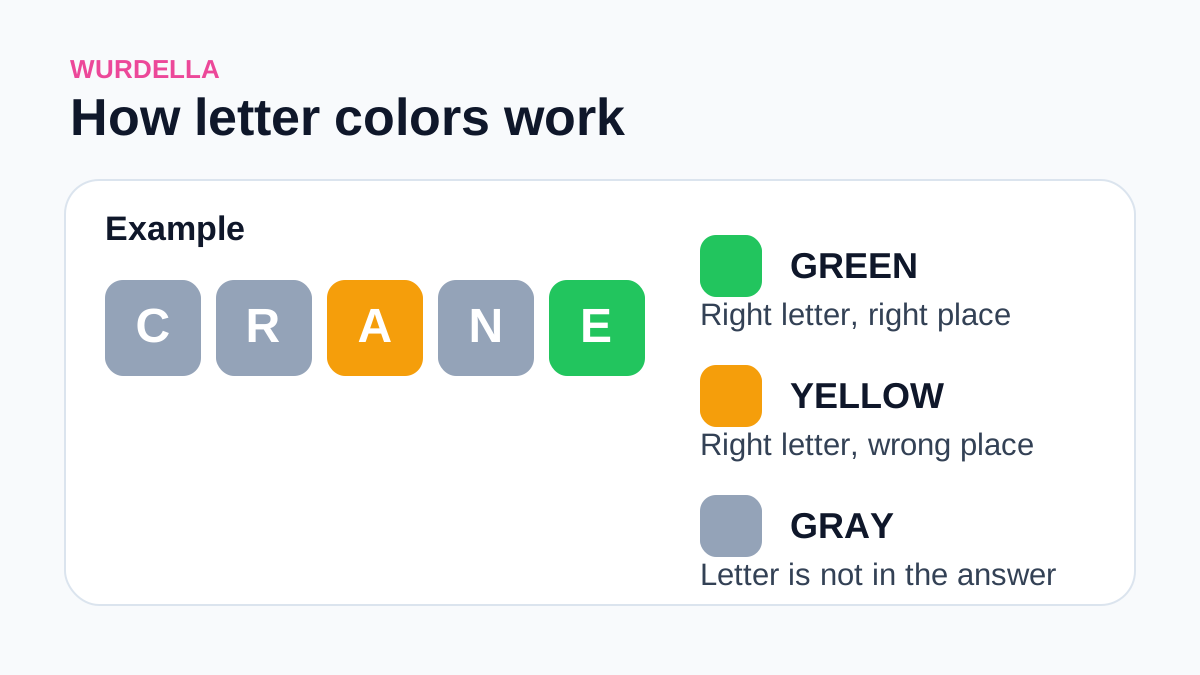
A yellow tile proves two things: the letter is in the answer and the position you tried is wrong. If the same letter becomes yellow in multiple positions, those failed positions accumulate and can leave only one legal place.
Write yellow information as a placement map when the board becomes complicated. A candidate that contains all the right letters can still be impossible if even one yellow returns to a rejected square.
Repeated letters change both quantity and position
When a guess contains two copies of the same letter, read both tiles together. One positive copy and one incorrect copy can indicate that the answer contains only one instance, while two positive copies strongly support duplication.
Do not force a duplicate because one copy is green, and do not reject all duplicates because unique-letter openers are often efficient. Early play favors coverage; later play should follow the actual candidate family.
Use endings and word families when the pattern narrows
Patterns such as _ A _ E R or _ _ I N G are more useful than a loose list of present letters because they suggest common word families. At that stage, look at the letters that distinguish the remaining candidates rather than returning to general English letter frequency.
A smart probe can be valuable when several answers differ by a small set of characters. With only one realistic candidate left, however, probing becomes unnecessary risk.
Use Wurdella Word Finder for exact constraints
The Word Finder includes pages for five-letter starts, endings, contained letter pairs and exact positions. These pages are most powerful when you already have a constraint from the board, because they turn a vague search into a smaller, inspectable group.
Use the pages as pattern study rather than an automatic answer button. The goal is to become faster at seeing candidate families yourself.
Practice across Default, Advanced and Expert
Default is the best place to build a repeatable solving routine. Advanced makes pattern recognition more important because familiar vocabulary cannot carry every round. Expert deliberately pushes into less obvious words, so clue decisions and exact constraint tracking matter more.
Keep comparisons inside the same difficulty when you are measuring improvement. Average guesses, clue use and solve rate are more meaningful than one isolated best score.
What to do with two guesses left
Late in the round, stop maximizing abstract information and protect the solve. List only candidates that satisfy every known rule, then identify the letters that distinguish them.
If two candidates remain and one legal guess can test the deciding letters, use it. If one candidate clearly fits and the alternatives violate the board, submit the answer instead of spending row five on a decorative probe.