Why four-letter words are useful for younger players
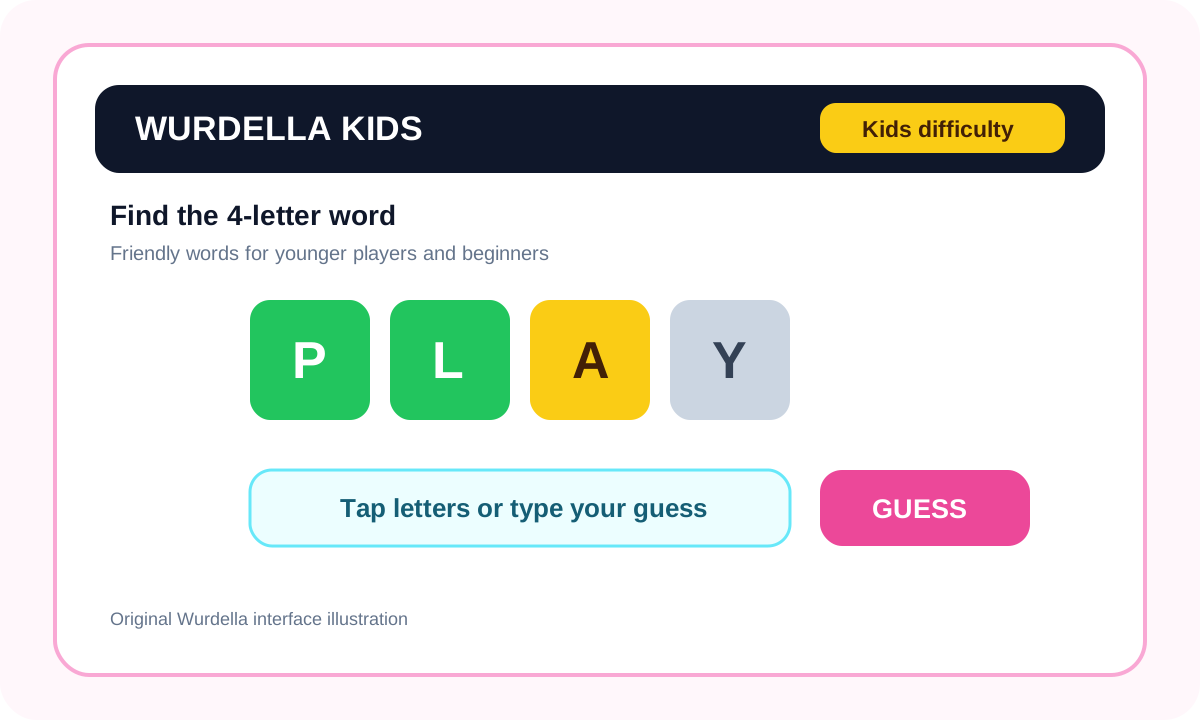
A shorter word reduces the number of positions a child has to track while still requiring genuine reasoning. One green tile becomes a strong anchor, and a yellow tile can be moved through only a few remaining positions, which makes cause and effect easier to see.
Four-letter play also creates room for familiar vocabulary, repeated-letter examples and common sound patterns without turning every round into an advanced dictionary test.
Turn every color into a spelling question
Instead of telling a child what to guess, ask what the board has proved. Which letter must stay? Which letter belongs in the word but has to move? Which letters should not be used again? These questions make the feedback meaningful before a full answer is discussed.
This works particularly well for children who know many words orally but are still strengthening written spelling. They can use meaning and sound to generate ideas, then use the board to check letter order.
A ten-minute parent-and-child routine
Play two or three Kids rounds. During the first round, solve cooperatively. During the second, let the child explain the board before each guess. During the third, step back unless help is requested.
After the final word, choose one answer or guess worth remembering. Say it aloud, give a simple meaning and use it in a sentence. That tiny review is enough to connect the puzzle to vocabulary without making the whole session feel like homework.
Use clues as support, not as the first move
The clue is available during the early rows and carries a scoring cost. With children, the score matters less than the habit: ask what the board already shows before using extra help.
A clue is useful when the child understands the tile logic but the vocabulary itself is unfamiliar. It is less useful when the answer is already obvious from the pattern and the child simply needs a moment to see it.
Family multiplayer ideas
Sibling matches work best when both children understand the color rules before the competition starts. Mixed-age families can use teams so an adult and child work together rather than expecting a younger player to compete directly with an experienced word-game fan.
Keep match targets short, rotate who begins and praise a well-reasoned guess even when it is wrong. The board rewards useful information, and family play should too.
Classroom activities with Kids mode
Project one board and begin with thirty seconds of silent thinking so the fastest speaker does not control the room. Collect two candidate words, then ask pupils what each one would test before the class votes.
For a spelling extension, hide the solved word after the round and ask pupils to spell it from memory. For vocabulary, ask for one simple definition or sentence. For teamwork, assign roles such as green tracker, yellow mover and excluded-letter checker.
When to move from Kids to Default
There is no age or score that automatically means a child should leave Kids mode. Move up when four-letter patterns feel comfortable and the child wants a harder challenge, not because the easier mode has become something they are supposedly too old to enjoy.
Default introduces five-letter words and increases the number of possible shapes. Switching back to Kids after a difficult session is completely reasonable and can reinforce confidence in the same core reasoning skills.
Definitions and pronunciation can extend a solved word
When word details are available, the result can become a small language-learning moment. Read the meaning together, say the word aloud and connect it to something familiar.
For children learning English or strengthening reading vocabulary, one concrete example is usually more useful than a long dictionary explanation. The goal is recognition and confident use.