Wurdella Guide
Wurdella Difficulty-Level Guide
The right difficulty keeps the game challenging without making it frustrating. Wurdella offers four levels for different ages, vocabularies and styles of competition.
Play Wurdella now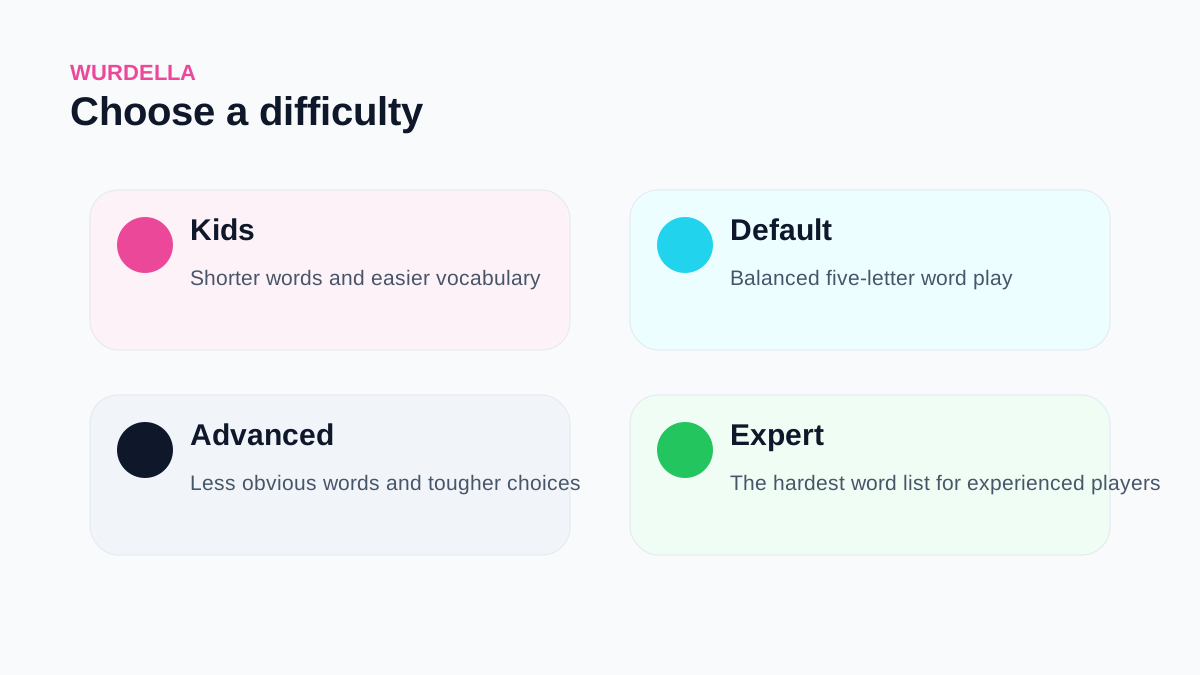
Kids mode
Kids mode uses shorter, more familiar words and is designed for younger players, early spelling practice and mixed-age family sessions. The simpler vocabulary leaves more attention available for learning how the colour feedback works.
Adults can still enjoy Kids mode when introducing the game or playing with children. The goal is not to make every round effortless but to keep the reasoning accessible.
Examples
- • Use Kids mode for a primary classroom warm-up.
- • Choose Kids mode when a family group includes new readers.
Default mode
Default is the best starting point for most players. It uses accessible five-letter words while still requiring careful deduction, position testing and occasional consideration of repeated letters.
Use Default for casual solo play, new multiplayer groups and mixed-experience teams. Move up only when the group is solving consistently and wants a wider vocabulary challenge.
Examples
- • A new adult player should normally begin on Default.
- • A family game with teenagers and adults will usually be most balanced on Default.
Advanced and Expert modes
Advanced introduces less obvious vocabulary and trickier patterns. It suits regular word-game players who understand the basic process and want fewer instantly recognisable answers.
Expert is intended for experienced solvers who enjoy rare words, tighter choices and a higher chance that a clue may become strategically useful. It should feel demanding, not random, so every answer must still belong to the intended word list.
Examples
- • Choose Advanced after Default becomes consistently easy.
- • Use Expert for serious competitions where every participant agrees to the harder vocabulary.
Choose the right level for the group
In multiplayer and team games, choose the level that keeps the least experienced participant involved. A slightly easier shared level usually produces a better match than a harder level that leaves half the group guessing blindly.
Keep score histories separate by difficulty. Improvement on Expert should be compared with previous Expert results rather than with a high score earned from a friendlier word list.
- ✓ Kids for younger learners.
- ✓ Default for most casual players.
- ✓ Advanced for regular word-game fans.
- ✓ Expert for experienced competitors.
- ✓ Move up when players win consistently without frustration.
Put the strategy into practice
The fastest way to remember a strategy is to use it in a real round. Play solo to practise at your own pace, then try multiplayer or team mode when you are ready to add competition.